Learning Outcomes:
i. Discover the two main approaches to program execution: compilation and interpretation.
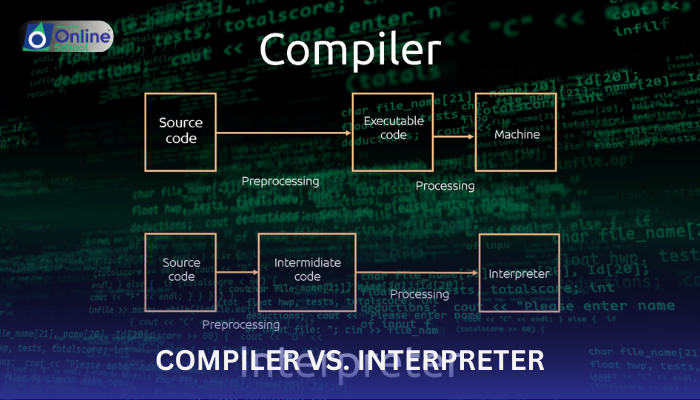
ii. Understand how a compiler translates the entire program into machine code before running it.
iii. Grasp how an interpreter translates and executes the program line by line, offering flexibility and instant feedback.
iv. Analyze the advantages and disadvantages of each approach, appreciating their suitability for different scenarios.
Introduction:
Imagine you write a recipe in a language your robot doesn't understand. To follow your instructions, the robot needs a translator. In the world of programming, compilers and interpreters are those translators, turning your high-level code into something the computer can understand. But they do it in different ways, like two sides of a coin, each with its own strengths and weaknesses. Let's dive into this fascinating world and learn how these translators work!
i. The Compiler: The Master Planner:
Think of a compiler as a meticulous chef who reads your entire recipe (the program) beforehand. It carefully analyzes each step, then translates it into a clear set of instructions the oven (the computer) understands. This translated version, called machine code, is fast and efficient, allowing the program to run smoothly without needing the recipe again.
Advantages: Faster execution, efficient for large programs, reliable for repetitive tasks.
Disadvantages: Takes time to compile before running, errors not always caught immediately.
Example: Compiling a complex game engine once, then enjoying smooth gameplay without needing to re-translate the code every time you play.
ii. The Interpreter: The Line-by-Line Guide:
Think of an interpreter as a patient teacher who reads and explains your recipe (the program) line by line. It takes each instruction, translates it, and guides the robot (the computer) through the steps. This allows for immediate feedback and flexibility, as you can change or debug your recipe as you go.
Advantages: Quick to start, ideal for testing and debugging, allows for dynamic changes during execution.
Disadvantages: Can be slower than compiled programs, less efficient for large programs.
Example: Trying out different cooking techniques in a recipe while watching the results in real-time, making adjustments as you go.
iii. Choosing the Right Tool:
The best approach depends on your needs:
- For large, performance-critical programs, a compiler's speed and efficiency are ideal.
- For experimentation, debugging, and rapid prototyping, an interpreter's flexibility and instant feedback shine.
Compilers and interpreters are invaluable tools in the programmer's toolbox. Understanding their differences empowers you to choose the right approach for each project. So, don't be afraid to experiment and discover how these two sides of the translation coin can help you bring your programming ideas to life!
